




ATCHAYA M
Updated on
30-07-2026
How LEDGERS Reduces Manual Work in GST Compliance
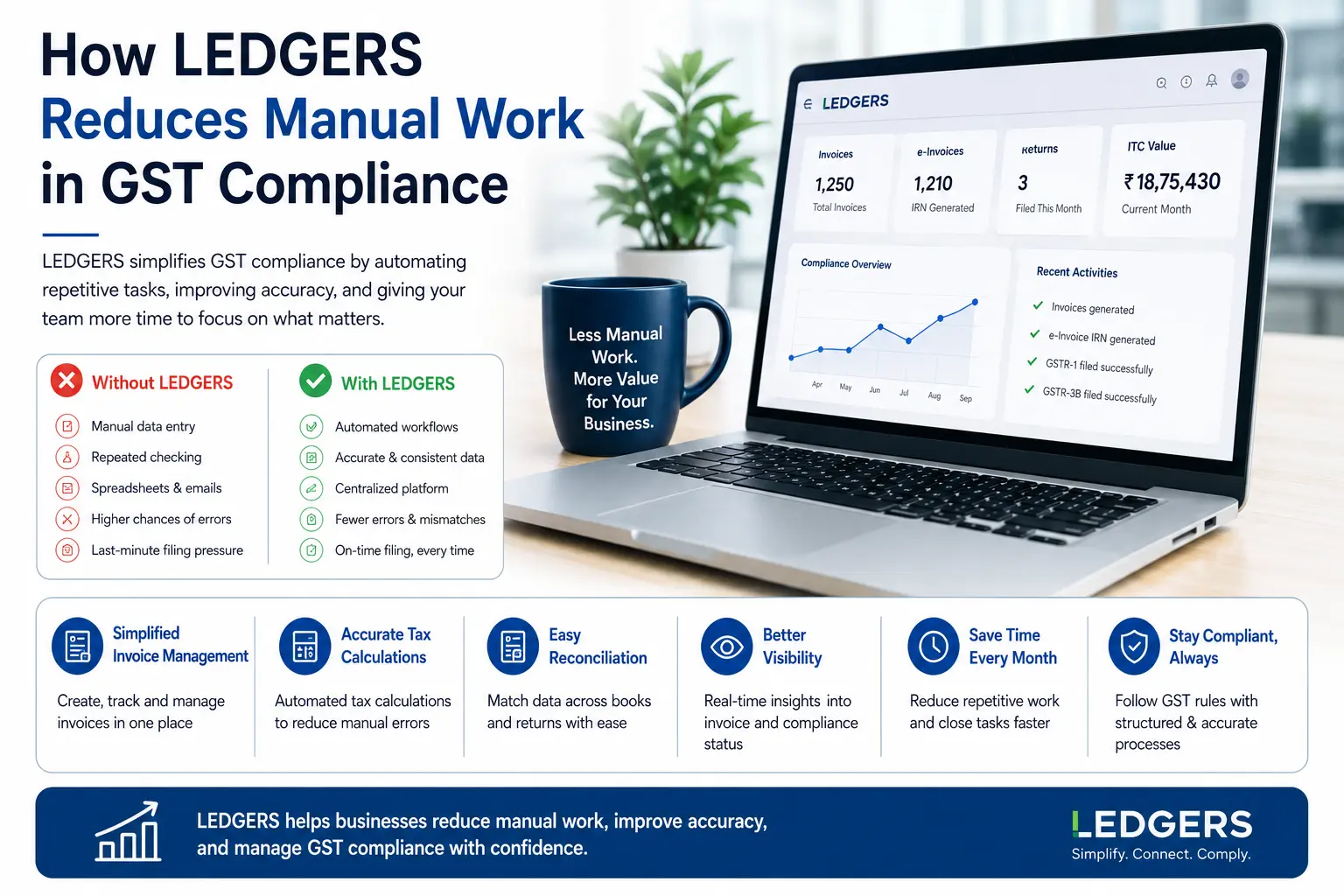
GST compliance involves much more than just filing returns. Businesses have to manage invoices, validate tax details, reconcile data, track Input Tax Credit (ITC), and ensure that everything is reported correctly within deadlines. When these activities are handled manually, the process becomes time-consuming and difficult to manage.
Many businesses still depend heavily on spreadsheets, repeated data entry, and disconnected workflows for compliance tasks. While this may work for smaller operations, it becomes inefficient as transaction volumes grow. Manual work not only slows down operations but also increases the chances of mistakes.
This is where structured systems like LEDGERS help businesses simplify GST compliance and reduce repetitive manual effort.
The Problem with Manual GST Processes
Manual GST handling usually involves multiple steps performed separately. Teams may:
- Enter invoice details manually
- Prepare reports using spreadsheets
- Compare records across systems
- Recheck tax calculations repeatedly
As the number of transactions increases, this process becomes harder to manage. Teams spend more time organizing data than actually reviewing compliance accuracy.
Repeated Data Entry Creates More Errors
One of the biggest challenges in manual workflows is repeated data entry. The same invoice details are often entered multiple times across different systems or files.
This leads to issues such as:
- Typing mistakes
- Duplicate entries
- Missing information
- Inconsistent records
Even small errors can later create reconciliation issues or delays during return filing.
By maintaining structured workflows, businesses can significantly reduce unnecessary data repetition.
Simplifying Invoice Management
Invoice management is a major part of GST compliance. In manual systems, businesses often struggle with:
- Tracking invoice status
- Maintaining numbering consistency
- Identifying missing invoices
LEDGERS helps organize invoice data in a structured manner so teams can easily manage invoices without depending on scattered files or manual tracking methods.
This improves both accuracy and efficiency.
Reducing Time Spent on Reconciliation
Reconciliation is one of the most time-consuming activities in GST compliance. Finance teams usually spend hours comparing:
- Accounting records
- Invoice data
- GST return values
When data is maintained consistently within a connected system, reconciliation becomes much easier. Teams spend less time identifying mismatches and more time reviewing important compliance details.
Better Visibility Reduces Follow-Ups
In manual workflows, teams often depend on calls, emails, or messages to collect missing information. This creates delays and confusion.
LEDGERS improves visibility by keeping invoice and compliance data accessible within one platform. Teams can quickly view required details without repeatedly following up with other departments.
This helps workflows move faster.
Reducing Last-Minute Filing Pressure
Manual work usually increases towards month-end when businesses prepare GST returns. Finance teams rush to:
- Complete pending entries
- Correct errors
- Compile invoice data
This creates stress and increases the possibility of mistakes.
When workflows are organized properly throughout the month, filing becomes more manageable and less dependent on last-minute effort.
Improving Accuracy Through Structured Processes
Manual processes often rely heavily on memory and individual effort. This creates inconsistency, especially when multiple people are involved.
Structured systems help maintain:
- Consistent invoice formats
- Proper tax calculations
- Organized customer data
- Standard workflows
This reduces dependency on manual checking and improves overall compliance accuracy.
Helping Teams Focus on Important Work
Finance teams should ideally spend more time analyzing data and ensuring compliance quality rather than performing repetitive manual tasks.
By reducing manual effort, LEDGERS allows teams to focus on:
- Reviewing discrepancies
- Monitoring compliance status
- Improving operational processes
This creates a more productive working environment.
Supporting Business Growth
As businesses grow, transaction volumes increase rapidly. Manual workflows that worked earlier become difficult to sustain.
A structured GST compliance system helps businesses scale more smoothly by:
- Managing larger invoice volumes
- Maintaining organized records
- Supporting consistent workflows
This ensures that growth does not lead to operational confusion.
Conclusion
Manual GST compliance processes can slow down operations, increase errors, and create unnecessary pressure for finance teams. As businesses grow, relying entirely on spreadsheets and repetitive workflows becomes inefficient.
LEDGERS helps reduce manual work by organizing invoice management, improving visibility, simplifying reconciliation, and maintaining structured compliance workflows. By reducing repetitive effort and improving accuracy, businesses can manage GST compliance more efficiently while allowing teams to focus on more meaningful tasks.