




ATCHAYA M
Updated on
30-07-2026
Understanding the Role of ITC in Day-to-Day Business Cash Flow
For many businesses, Input Tax Credit (ITC) is often viewed only as a GST compliance concept. It is usually discussed during return filing, reconciliation, or audit preparation. However, ITC plays a much bigger role in everyday business operations than many organizations realize.
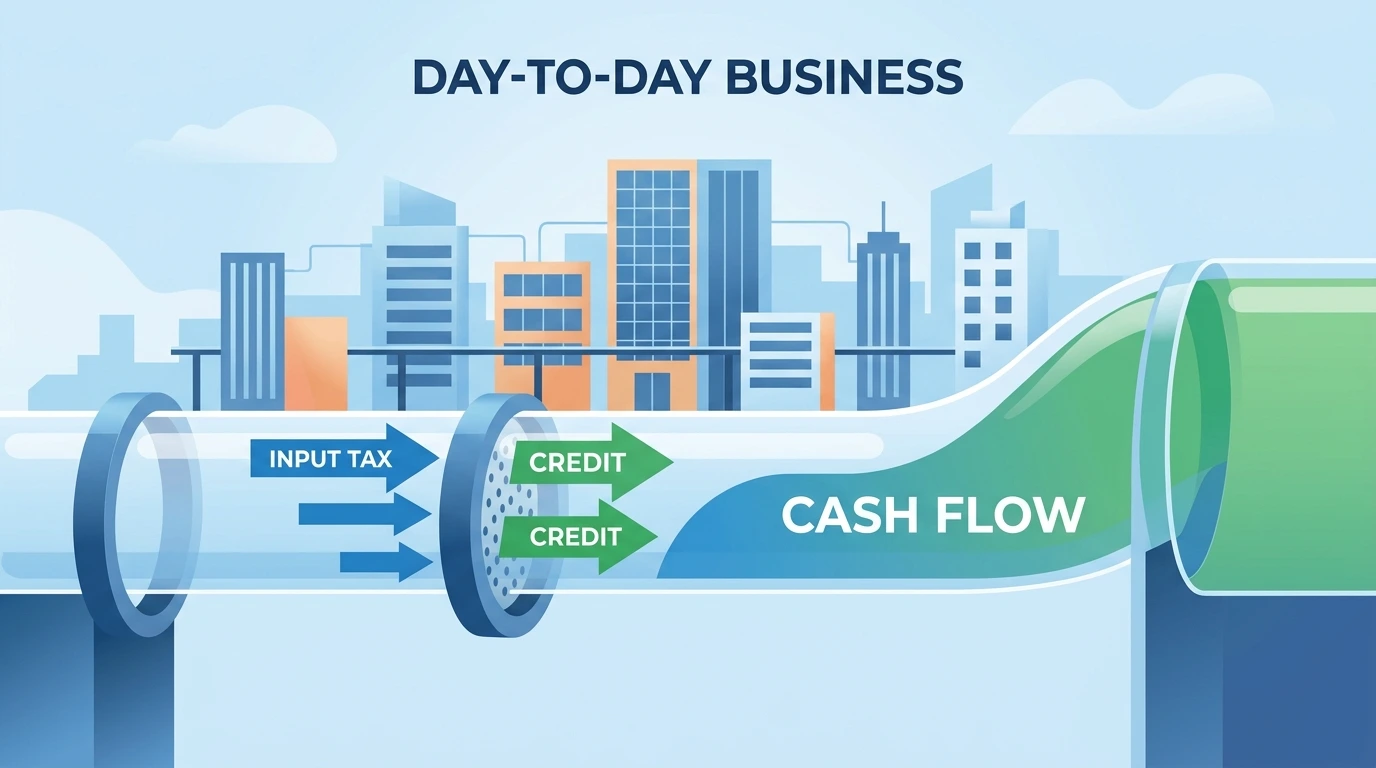
In reality, ITC directly affects cash flow. The way businesses manage purchase invoices, vendor compliance, and GST records can influence how much working capital remains available for day-to-day operations. Businesses that manage ITC efficiently usually maintain better financial control, while poor ITC management can quietly create unnecessary financial pressure.
Understanding how ITC impacts daily business cash flow helps organizations make more informed operational and financial decisions.
What Is Input Tax Credit (ITC)?
Input Tax Credit allows businesses to claim credit for the GST paid on purchases and expenses used for business purposes. This credit can later be adjusted against GST liability on sales.
In simple terms:
- Businesses pay GST while making purchases
- That tax becomes available as credit
- The credit reduces future GST payable
This mechanism prevents double taxation and supports smoother business transactions.
Why ITC Matters Beyond Compliance
Many businesses focus mainly on whether ITC is claimed correctly in GST returns. But ITC also influences how much cash a business needs to pay from its own funds.
When ITC is available properly:
- GST liability reduces
- Less cash is required for tax payment
- Working capital pressure becomes lower
However, when ITC is delayed, blocked, or mismatched, businesses may need to pay higher tax amounts temporarily from available cash reserves.
The Connection Between ITC and Cash Flow
Cash flow is one of the most important aspects of running a business. Daily operations such as:
- Vendor payments
- Employee salaries
- Inventory purchases
- Operational expenses
all depend on available funds.
If eligible ITC is not reflected properly or cannot be claimed on time, businesses may experience unnecessary cash outflow. Even though the amount may eventually become available later, the temporary impact on working capital can still affect operations.
Delayed Supplier Uploads Can Affect Cash Flow
One of the common challenges businesses face is delayed invoice reporting by suppliers. If suppliers do not upload invoices correctly or on time, the corresponding ITC may not reflect properly.
This creates situations where:
- Businesses cannot fully utilize available credit
- Additional GST payment may be required temporarily
- Reconciliation effort increases
Over time, repeated delays can impact overall financial planning.
Importance of Accurate Purchase Records
Maintaining accurate purchase records is critical for smooth ITC management. Missing invoices, incorrect GSTINs, or tax mismatches can all affect ITC eligibility.
Businesses should regularly review:
- Purchase invoice accuracy
- Tax calculation consistency
- Supplier GST details
- Invoice upload status
Small mistakes in purchase data can create larger ITC-related issues later.
Regular Reconciliation Helps Protect Cash Flow
Businesses that perform regular GST reconciliation are usually able to manage ITC more effectively. Reconciliation helps identify:
- Missing supplier invoices
- Mismatched tax amounts
- Duplicate entries
- Incorrect purchase records
By resolving these issues early, businesses can ensure that eligible ITC remains available when needed.
Why ITC Visibility Is Important
As businesses grow, tracking ITC manually becomes difficult. Finance teams need visibility into:
- Available ITC balance
- Pending mismatches
- Ineligible credits
- Vendor-related issues
Without proper visibility, businesses may struggle to estimate actual tax liability accurately.
A structured approach helps teams monitor ITC more confidently and make better financial decisions.
Reducing Dependency on Manual Tracking
Many organizations still track ITC through spreadsheets or separate manual reports. While this may work for smaller businesses, it becomes difficult to manage as transaction volumes increase.
Manual tracking often leads to:
- Delayed identification of mismatches
- Repeated checking effort
- Higher risk of missing credits
Organized systems help reduce these inefficiencies and maintain cleaner records.
How Better ITC Management Supports Growth
For growing businesses, efficient ITC management improves financial flexibility. Better utilization of available credit means businesses can:
- Reduce unnecessary cash outflow
- Improve working capital usage
- Plan operational expenses more effectively
Over time, even small improvements in ITC management can positively affect overall business stability.
Building Better Vendor Coordination
ITC accuracy also depends heavily on supplier compliance. Businesses should maintain proper coordination with vendors to ensure invoices are uploaded correctly and on time.
Regular communication helps:
- Reduce mismatches
- Improve reconciliation accuracy
- Prevent ITC delays
Strong vendor discipline supports stronger compliance overall.
Conclusion
Input Tax Credit is not just a GST filing concept — it directly influences day-to-day business cash flow. Proper ITC management helps businesses reduce unnecessary tax outflow, maintain better working capital, and improve financial control.
By maintaining accurate purchase records, performing regular reconciliation, and improving visibility into ITC data, businesses can manage both compliance and cash flow more efficiently. A disciplined approach to ITC management supports smoother operations and creates a stronger financial foundation for long-term growth.