
ATCHAYA M
Updated on 30-07-2026
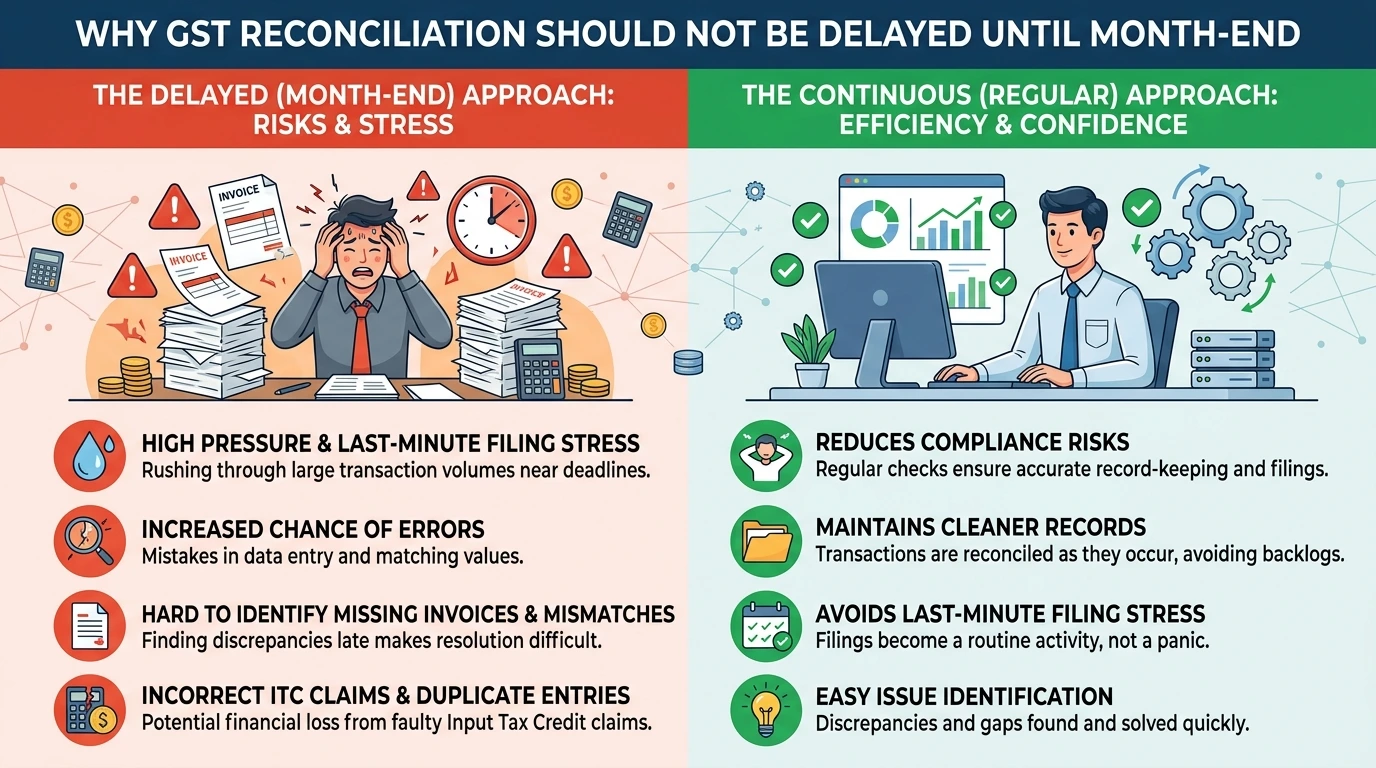
In many businesses, GST reconciliation is often treated as a month-end activity. Finance teams usually focus on daily operations throughout the month and postpone reconciliation until return filing deadlines come closer. While this approach may seem manageable in the short term, it often creates unnecessary pressure and increases the chances of errors.
As transaction volumes grow, delaying reconciliation can make GST compliance more difficult than it needs to be. Missing invoices, mismatched values, duplicate entries, and incorrect Input Tax Credit (ITC) claims are much harder to identify when businesses wait until the end of the month to review everything at once.
Regular and timely reconciliation helps businesses maintain cleaner records, reduce compliance risks, and avoid last-minute filing stress.
GST reconciliation is the process of comparing business records with GST-related data to ensure consistency and accuracy. This usually involves matching:
The purpose of reconciliation is to identify differences early and correct them before returns are filed.
There are several reasons why businesses postpone reconciliation activities until month-end:
While these reasons are common, the workload usually becomes much heavier when everything is handled together at the last minute.
When reconciliation is delayed, finance teams often have to review a large volume of transactions within a short time. This creates several challenges.
Reviewing hundreds or thousands of invoices together makes it easier to overlook mistakes such as:
Small issues that could have been fixed easily earlier become harder to trace later.
Delayed reconciliation creates pressure near GST return deadlines. Finance teams may need to:
This increases stress and affects the quality of review.
One of the biggest risks of delayed reconciliation is incorrect ITC reporting. If purchase invoices do not match supplier-uploaded data, businesses may face:
Regular reconciliation helps identify these mismatches early.
When issues are discovered weeks later, it becomes harder to identify what caused them. Employees may not remember transaction details clearly, and supporting information may take time to collect.
Fixing errors immediately after they occur is much easier than investigating them later.
Businesses that perform reconciliation regularly during the month usually experience smoother compliance workflows.
Some major benefits include:
Continuous reconciliation keeps records cleaner and more organized.
Instead of treating reconciliation as a separate month-end task, businesses should integrate it into regular operations.
Simple practices include:
Even small routine checks can prevent large reconciliation problems later.
GST reconciliation often depends on coordination between multiple teams. Sales, purchase, operations, and finance departments all contribute data that affects GST reporting.
Regular reconciliation helps teams:
This improves overall workflow efficiency.
When businesses delay reconciliation, they often rely on manual corrections at the last minute. This increases repetitive work and the possibility of new mistakes.
Timely reconciliation reduces the need for emergency corrections and helps finance teams work in a more controlled manner.
Structured GST systems help businesses perform reconciliation more efficiently by:
This allows finance teams to focus more on reviewing exceptions rather than searching for issues manually.
Businesses that follow regular reconciliation practices generally build stronger compliance discipline over time. Their records remain more accurate, audits become easier to manage, and filing processes become more predictable.
Instead of reacting to issues during deadlines, they maintain a proactive approach throughout the month.
GST reconciliation should not be postponed until month-end. Delaying the process increases workload, creates pressure, and makes it harder to identify and correct errors efficiently.
By performing reconciliation regularly and integrating it into daily workflows, businesses can improve accuracy, reduce compliance risks, and make GST filing much smoother. A proactive reconciliation approach not only saves time but also helps businesses maintain stronger financial and compliance control as they grow.
