




ATCHAYA M
Developer
Updated on
18-05-2026
How Businesses Can Prepare for GST Audits More Efficiently
For many businesses, GST audits are often associated with stress, urgency, and last-minute document collection. Even companies that regularly file GST returns sometimes struggle when audit-related reviews begin. The reason is simple — filing returns and being audit-ready are not always the same thing.
A GST audit is not just about checking whether returns were filed on time. It involves verifying whether invoice records, tax calculations, Input Tax Credit (ITC), reconciliations, and supporting documents are properly maintained and consistent across the business.
Businesses that follow organized compliance practices throughout the year usually handle audits more confidently. On the other hand, companies that depend heavily on manual corrections or scattered records often face unnecessary difficulties during the audit process.
Preparing for GST audits efficiently is less about last-minute preparation and more about maintaining consistency throughout daily operations.
Why GST Audit Preparation Matters
GST audits are conducted to verify whether businesses have reported transactions correctly and complied with applicable GST regulations. During an audit, authorities may review:
- Sales and purchase invoices
- GST returns filed
- ITC claims
- Tax payment records
- Reconciliation statements
- Supporting financial documents
If records are incomplete or inconsistent, businesses may face additional scrutiny, clarification requests, or delays in closing the audit process.
The Common Mistake Businesses Make
One of the most common mistakes businesses make is treating audit preparation as a separate activity that starts only after receiving notice or approaching year-end.
At that stage, finance teams often rush to:
- Collect missing invoices
- Reconcile old data
- Correct inconsistencies
- Search through multiple spreadsheets and folders
This creates unnecessary pressure and increases the chances of missing important details.
Keeping Records Organized Throughout the Year
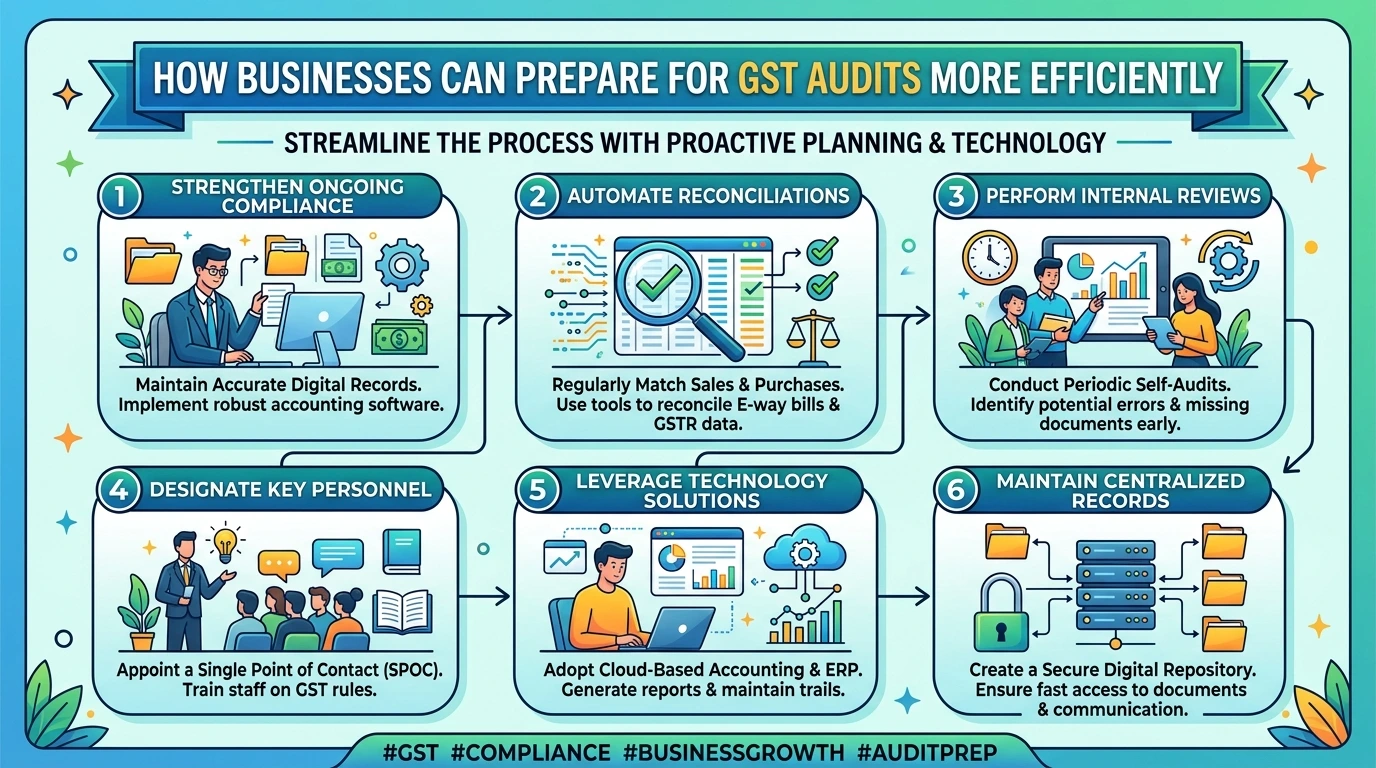
The easiest way to prepare for audits is to maintain organized records consistently rather than waiting until the audit period begins.
Businesses should ensure that:
- Invoice records are properly stored
- GST returns are filed accurately
- Supporting documents are maintained systematically
- Reconciliations are completed regularly
When records are already organized, audit preparation becomes much simpler.
Importance of Accurate Invoice Management
Invoices form the foundation of GST compliance. During audits, invoice-related mismatches are one of the first areas that may attract attention.
Businesses should regularly review:
- Invoice numbering consistency
- GSTIN accuracy
- Tax calculation correctness
- Duplicate or missing invoices
Maintaining clean invoice records reduces the chances of discrepancies during audits.
Regular Reconciliation Reduces Audit Pressure
Businesses that reconcile their GST data regularly usually face fewer problems during audits. Reconciliation helps identify mismatches early instead of discovering them months later.
Important reconciliation activities include:
- Matching purchase records with ITC data
- Comparing returns with accounting books
- Reviewing supplier invoice consistency
Continuous reconciliation creates stronger confidence in the accuracy of records.
Maintaining Proper Supporting Documents
GST audits are not limited to invoice review alone. Businesses may also need to provide supporting records such as:
- Debit and credit notes
- E-way bills
- Payment records
- Vendor communication records
- Adjustment documents
Maintaining these documents properly throughout the year prevents confusion later.
Reducing Dependency on Spreadsheets
Many businesses still manage compliance data through multiple spreadsheets and manual tracking methods. While this may work temporarily, it often creates challenges during audits.
Common problems include:
- Multiple file versions
- Missing updates
- Data inconsistency
- Difficulty tracing historical changes
A more structured system improves visibility and reduces dependency on scattered records.
Improving Team Coordination
GST audit preparation is not handled only by finance teams. Sales, purchase, operations, and accounts teams all contribute data that affects compliance records.
Efficient audit preparation requires:
- Clear communication between teams
- Consistent data handling practices
- Defined responsibilities
When departments work in coordination, audit-related issues become easier to resolve.
Reviewing ITC Claims Carefully
Input Tax Credit is one of the most sensitive areas during GST audits. Incorrect or unsupported ITC claims can create complications.
Businesses should regularly verify:
- Whether supplier invoices are properly reflected
- If ITC eligibility conditions are satisfied
- Whether purchase records match return data
Timely review helps reduce future audit risks.
Why Proactive Compliance Helps
Businesses that maintain proactive compliance practices throughout the year are usually more prepared for audits. Instead of reacting to problems after they appear, they continuously monitor and improve their records.
This leads to:
- Better financial clarity
- Faster audit response
- Reduced correction work
- Greater compliance confidence
Building an Audit-Ready Culture
Efficient audit preparation is not only about software or documents — it is also about creating awareness within teams.
Employees involved in invoicing, accounting, and reporting should understand:
- The importance of accurate records
- Proper documentation practices
- Consistent compliance procedures
An organized compliance culture helps businesses stay prepared at all times.
Conclusion
GST audits become much easier when businesses maintain organized records and structured workflows throughout the year. Waiting until the last minute to prepare often creates unnecessary pressure and increases the risk of missing important details.
By focusing on accurate invoicing, regular reconciliation, proper document management, and proactive compliance practices, businesses can prepare for GST audits more efficiently. A well-organized approach not only simplifies audits but also strengthens overall financial and compliance management.