




RAGU M
Updated on
30-07-2026
Understanding the Golden Equation of Accounting
The Golden Equation of Accounting forms the foundation of financial management principles. It is a vital formula that aids businesses in maintaining accurate records, thereby fostering transparency and integrity in financial reporting. This article delves into the intricacies of this equation, emphasizing its components and practical applications in modern-day accounting.
The Basics: What is the Golden Equation of Accounting?
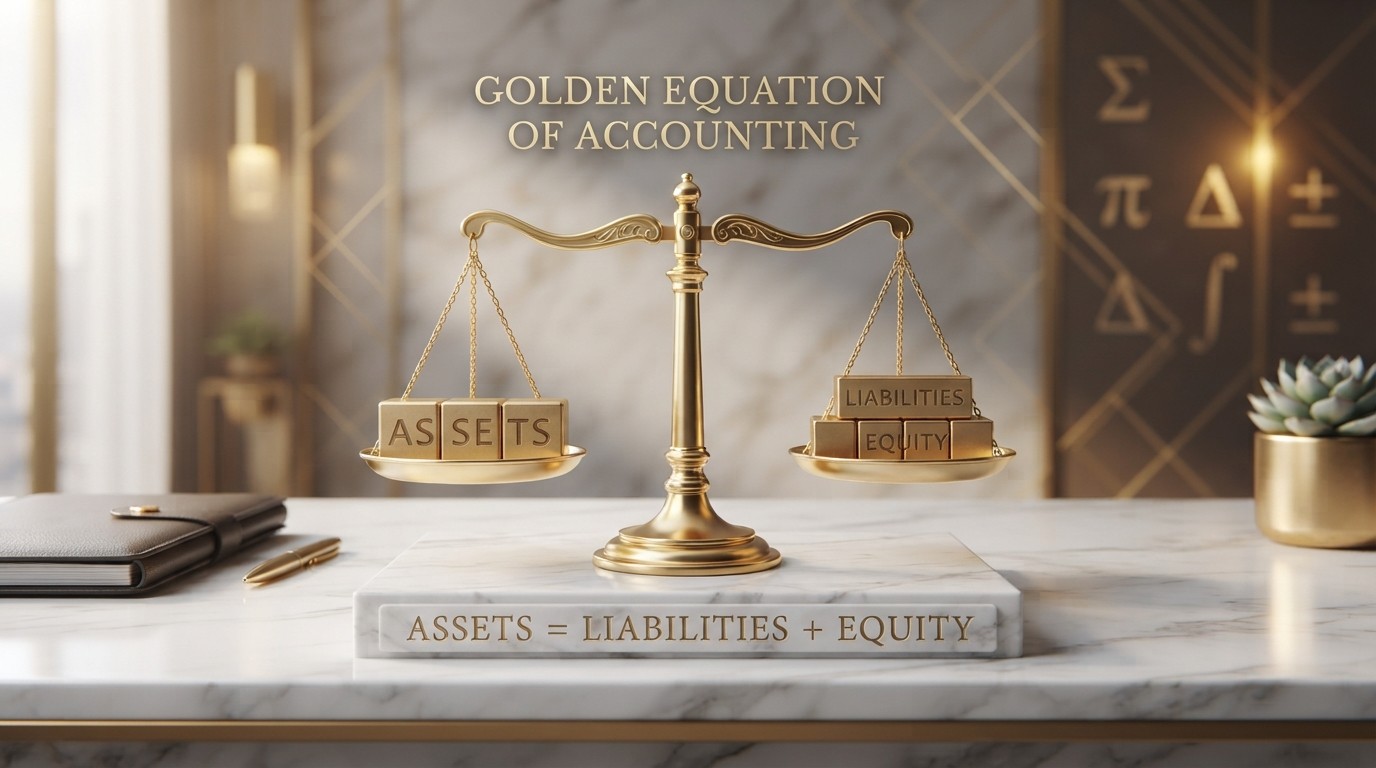
At its core, the Golden Equation of Accounting is represented as âAssets = Liabilities + Equity.â This simple yet profound equation lays the groundwork for everything from balancing balance sheets to understanding the financial health of a company.
Components of the Equation
To fully grasp the Golden Equation of Accounting, it's essential to understand its key components:
- Assets: These are resources owned by the company. Assets can be tangible, like machinery and buildings, or intangible, like copyrights and patents.
- Liabilities: These represent the company’s obligations or debts that need servicing. Examples include loans and accounts payable.
- Equity: Equity is what the shareholders own after all liabilities are accounted for. It's often referred to as the book value of the company.
Applications in Financial Statements
The Golden Equation of Accounting is integral to financial statements. Each financial statement relies on ensuring that some variation of this equation balances, providing investors and stakeholders with accurate financial information. This formula is the backbone of the Chart of Accounts which organizes transactions efficiently.
Balance sheets are the principal application of this equation. If the balance sheet balances, it indicates accurate record-keeping.
Implementing the Equation in Business Practices
Practical business applications of the Golden Equation include asset management, efficient liability tracking, and calculating shareholder equity accurately. It informs better decision-making, supports management strategies for small businesses, and facilitates understanding of a company's financial position.
Benefits of Understanding the Golden Equation
The benefits of mastering the Golden Equation are multifaceted:
- Improved financial planning through accurate bookkeeping.
- Enhanced transparency and credibility among investors.
- Facilitates the use of AI-powered bookkeeping tools for efficient operations.
- Supports accurate cash flow management and forecasting.
- Guides the development of comprehensive accounting policies for your business.
Common Pitfalls and How to Avoid Them
Even with its simplicity, pitfalls can occur if the Golden Equation is misunderstood:
- Miscalculating assets due to inflation adjustments.
- Ignoring short-term liabilities, which can skew financial analysis.
- Mishandling negative equity, which requires strategic profit and loss assessments.
Avoid these pitfalls by leveraging accurate number precision tools, and conducting routine checks to ensure consistency and accuracy in your financial records.
Frequently Asked Questions
Why is the Golden Equation of Accounting important?
It forms the basis for all accounting processes and ensures accurate representation of a company’s financial status.
How does the equation impact financial decision-making?
By balancing assets, liabilities, and equity, it helps inform investments, budgeting, and strategic growth efforts.
Can the Golden Equation be applied with AI technologies?
Yes, modern tools like AI in accounting can automate processes, reduce errors, and enhance efficiency within the equation's framework.
What are common challenges associated with the Golden Equation?
Challenges include accurately valuing assets, properly acknowledging liabilities, and ensuring true equity representation.
How does this equation aid in strategic planning?
Using the equation allows for more informed software selections in the AI era, accurate risk assessment, and stronger financial strategies.
Summarizing the Golden Equation of Accounting
The Golden Equation of Accounting is not merely a formula; it is the backbone of every financial statement and the cornerstone of effective financial management. Understanding and applying it can yield numerous business advantages from precise reporting to strategic advantage. For a modern business, integrating AI and digital accounting practices enhances the application and benefits of this timeless accounting truth.