




PUGALENTHI
Updated on
30-07-2026
How to Reduce Compliance Errors in Accounting Systems
LEDGERS makes GST compliance easy. It includes reconciliation in the accounting process. This helps businesses find mismatches early. They can fix them before they cause problems like interest or penalties.
LEDGERS also syncs GSTN data automatically. It tracks invoices one by one. The system checks for errors. This way businesses can comply with GST rules
They do not have to make last-minute corrections. They do not have to follow up with LEDGERS. LEDGERS helps businesses, with GST compliance. GST compliance is made easy with LEDGERS.
Understanding Compliance Errors in Accounting
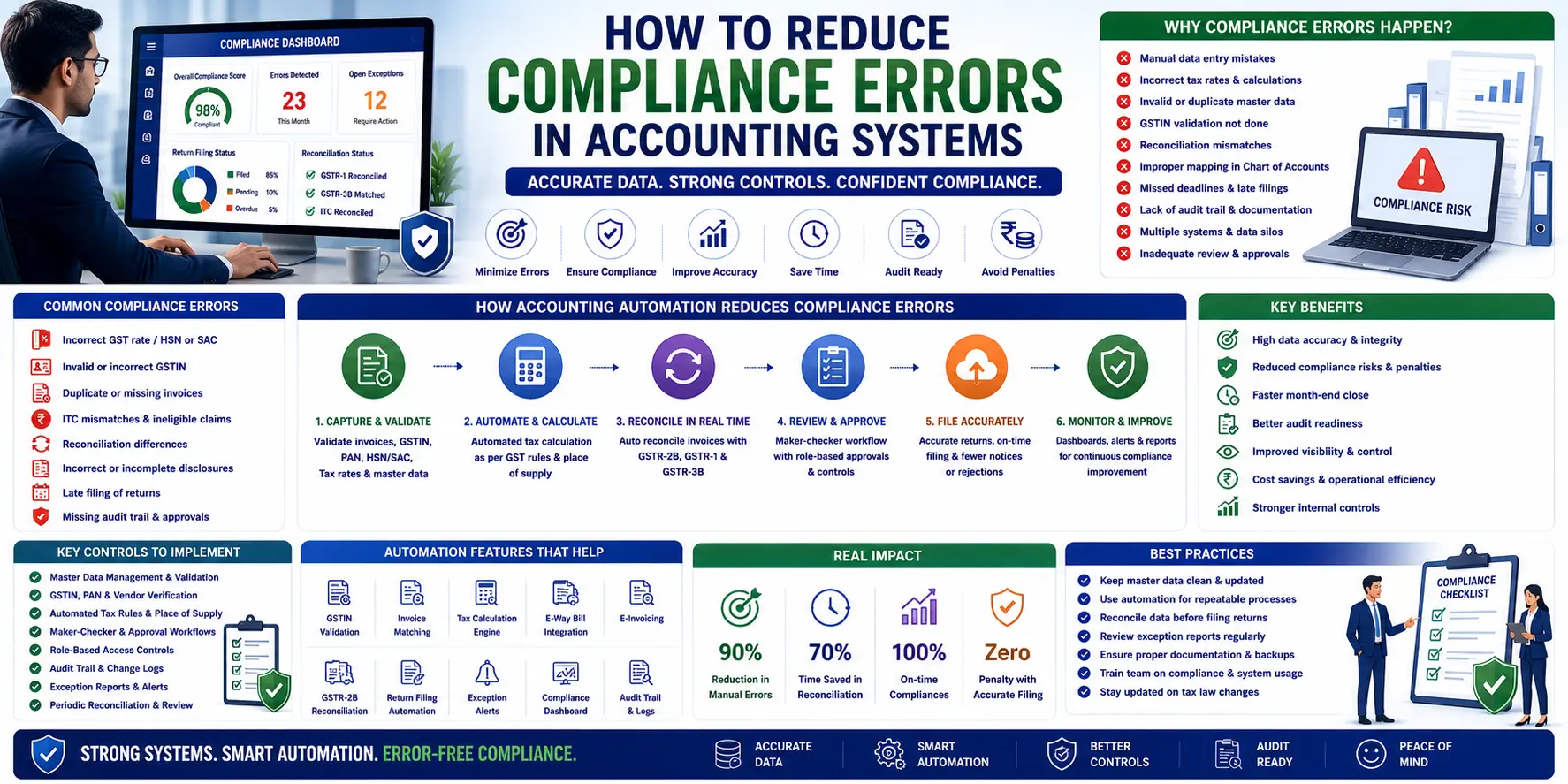
Accounting compliance involves adhering to the rules and regulations set forth by governing bodies to ensure accurate financial reporting. Common compliance errors include:
- Incorrect GST Rates
- Invalid GSTINs
- Duplicate Invoices
- Reconciliation Mismatches
- Improper Chart of Accounts Mapping
- Missed Filing Deadlines
- Inadequate Audit Trails
Such errors occur due to a variety of reasons, ranging from manual entry mistakes to a lack of awareness about the constantly changing regulatory environment.
The Impact of Compliance Errors
Compliance errors can have several consequences:
Financial Penalties: If you make mistakes when you do your tax calculations and when you report them you will have to pay fines.
Audit Issues: If the information you give is not correct it can cause audits to happen. Audits are very expensive. They take a lot of time.
Reputation Damage: If a business keeps making mistakes it can hurt the businesss reputation and the trust that people who have a stake, in the business have in it.
Strategies to Minimize Compliance Errors
1. Automate Validations and Calculations
Implementing automated solutions can significantly reduce human error. Automated calculations ensure accuracy in GST rates and tax figures.
2. Master Data Management
Maintaining a clean and organized database helps prevent errors like duplicate invoices or invalid GSTINs.
3. Role-Based Access Controls
Restricting access based on roles ensures that only authorized personnel can make changes, reducing the risk of incorrect data entries.
4. Real-Time Reconciliation
Businesses should invest in systems that offer real-time reconciliation to promptly identify and resolve discrepancies.
5. Use AI-Powered Validation Engines and APIs
These technologies can verify data consistency, validating GSTINs, and other critical numbers, ensuring compliance with minimal manual intervention.
Implementing Practical Solutions with Accounting Software
Modern accounting software can facilitate error reduction by offering:
- GSTIN Validation: Automatically validate GSTINs to prevent filing errors.
- Invoice Verification: Ensure accuracy and prevent duplication of invoices.
- Automated Tax Calculations: Use software for computing taxes according to current regulations.
- Reconciliation with GST Returns: Automate reconciliation to ensure that all returns are consistent with recorded transactions.
The Role of Technology in Ensuring Compliance
Technological advancements play a pivotal role in enhancing compliance:
- APIs: Facilitate seamless integration between systems, allowing for accurate data exchange and minimizing errors.
- Compliance Dashboards: Provide a comprehensive view of compliance status, highlighting areas that need attention.
- Audit Logs: Provide a detailed record of all changes and transactions, assisting in auditing processes.
Best Practices for Maintaining Compliance
Businesses should adopt the following best practices:
- Employee Training: Regular training ensures staff stay informed about compliance requirements and system updates.
- Documentation Standards: Maintain well-documented processes and records for transparency.
- Continuous Monitoring: Regular audits and compliance reviews can preemptively catch and correct errors.
Conclusion
Reducing compliance errors is a job that needs a thorough plan. This plan should bring together technologies and better ways of doing things. Indian businesses can do a job of following the rules by using computers to do calculations using artificial intelligence to check things and staying up, to date on what the government requires.
If Indian businesses put in place controls and check things regularly they can reduce the chance of something going wrong. This will help them handle money correctly and do things efficiently.
It will also help Indian businesses do well and follow the rules over a time. Indian businesses need to do these things to reduce compliance errors and have a compliance posture.
LEDGERS makes GST compliance easy by including reconciliation in the accounting process. This helps businesses find mismatches early and fix them before they cause problems like interest or penalties. LEDGERS also syncs GSTN data automatically. It tracks invoices one by one. Uses the system to check for errors. This way businesses can comply with GST rules accurately. They do not have to make last-minute corrections or follow up manually with LEDGERS. LEDGERS helps businesses, with GST compliance and GST compliance is made easy with LEDGERS.