




PUGALENTHI
Updated on
30-07-2026
Late Filing of GST Returns: Interest and Penalties Explained
In countries with a GST or similar VAT tax systems, GST compliance is necessary for any business operating within that jurisdiction. Failure to file GST returns by the due date can result in a number of financial penalties, including interest charges, late fees, etc., which will negatively affect business cash flow. This guide - "Late Filing Of GST Returns - Interest and Penalties Explained" - aims to clarify what occurs when a business files its GST returns after their due date. The guide will provide specific scenarios involving late GSTR-1 and GSTR-3B submissions and their impact on both compliance and cash flow, in addition to providing useful tips to ensure compliance with GST filing timelines.
Understanding the Importance of Timely GST Filing
The timely filing of GST returns is crucial for maintaining business credibility and operational flow. Filing delays can disturb cash flow and attract punitive measures. Let's begin by understanding the nature and types of GST returns.
- GSTR-1: This return captures all sales and outward supplies made by the business. Timely filing ensures accurate compliance records and avoids discrepancies.
- GSTR-3B: A simplified summary return that includes a summary of sales, purchases, input tax credits, and tax payments. Essential for self-assessment and tax liabilities under GST.
Immediate Ramifications of Late GST Filing
Interest on Late Payment
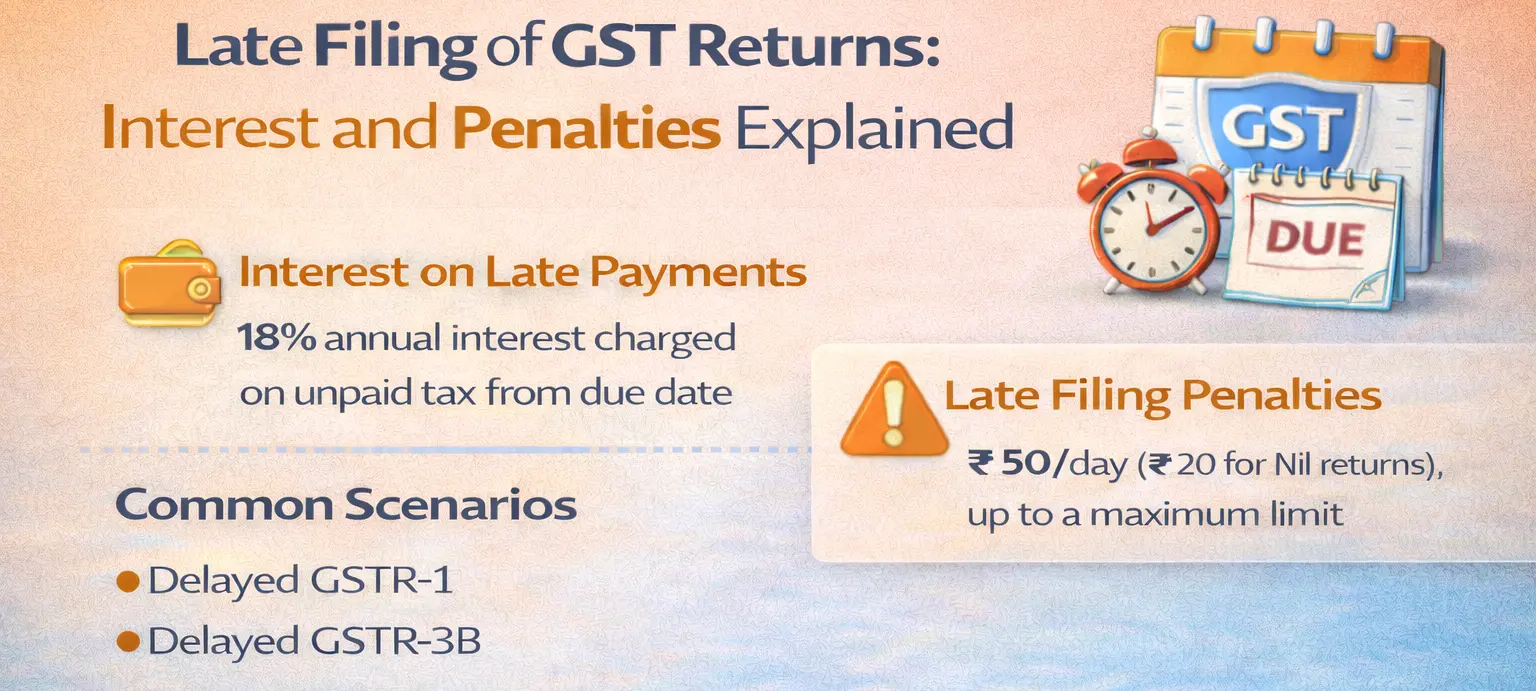
One of the immediate financial impacts of late GST filing is the interest charged on outstanding liabilities. The GST regulations mandate an interest rate, generally set at around 18% per annum, on taxes that remain unpaid beyond the original due date. The calculation is based on:
- The outstanding amount
- The period from the original due date to the payment date
Timely payments avoid these unnecessary financial burdens.
Late Fees and Penalties
Apart from interest, late filing triggers penalties in the form of late fees. These are generally calculated on a per-day basis, significantly adding up if not paid promptly. Here what you might incur:
- For returns with tax liabilities: A late fee of Rs. 50 per day (Rs. 25 CGST + Rs. 25 SGST) for each day the return is delayed.
- For returns with no tax liabilities: A reduced late fee of Rs. 20 per day (Rs. 10 CGST + Rs. 10 SGST).
It's crucial to minimize these fees by acting swiftly upon realization of any pending filings.
Real-life Scenarios of Delayed Filings
Delayed GSTR-1 Filing
Businesses failing to file GSTR-1 on time generally face issues with invoice mismatch and claim disallowances for their customers. This affects business relationships and might trigger further compliance scrutiny.
Moreover, inaccuracies can lead to incorrect ITC (Input Tax Credit) being reflected for the recipients, impairing their financial operations.
Delayed GSTR-3B Filing
Late filing of GSTR-3B can lead to compounded interest and cash flow shortages. Credit mismatches are another common issue, especially affecting SMEs dependent on accurate cash forecasting.
Additionally, late filing could lead to blocking of e-way bills and future legal complications.
Impact on Compliance and Cash Flow
Being non-compliant affects more than just finance; it can lead to operational disruptions. Suppliers and customers might lose trust due to reporting inaccuracies. Financial penalties further impact the cash reserves, affecting overall liquidity and investment capabilities.
- Cash Flow Strain: Interest and penalties can take a toll on cash resources allocated for other critical business developments.
- Reputational Risk: Frequent non-compliance might raise red flags with tax authorities, impacting your business's reputational capital.
How to Avoid Late GST Filing
To avoid late filing, focus on setting up a systematic process:
- Automated Reminders: Utilize software to get automated reminders for GST deadlines.
- Professional Assistance: Hire experienced accountants or consultants for efficient GST management.
- Training & Awareness: Regularly train your staff on the importance of GST compliance.
Conclusion
To Summarize, If You Want To Maintain The Viability Of Your Business, You Must Know The Consequences Of Filing GST Returns Too Late Once You Are Aware Of The Interest And Penalty Costs Associated With Filing GST Late, You Can Effectively Avoid These Expenses By Taking Preventive Measures To Stay Ahead Of Them (E., G., Stay Current With Filing Requirements, Consult With An Expert To Help You Comply). By Taking The Initiative To File Timely Returns Businesses Get To Improve Cash Flow Because They Are Not Paying Monetary Expenses As A Result Of Late Filings. Businesses Can Develop Continual Compliancy By Focusing On The Timeliness Of Their Filings, It Will Set A Foundation For Continued Prosperity And Stability.
If You Want Your Business To Be Successful In Today's Environment Then You Need To Be Knowledgeable And Utilize Strategic Practices To Avoid Late GST Email Filing.
LEDGERS simplifies GST compliance by embedding reconciliation directly into the accounting workflow, helping businesses identify mismatches early and address them before they lead to interest or penalties. With automated GSTN data synchronization, invoice-level tracking, and system-driven validations, LEDGERS enables seamless, reliable compliance without last-minute corrections or manual follow-ups.